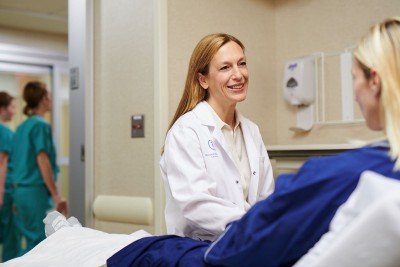
Thoracic surgeon Daniela Molena leads clinical trials to improve outcomes for people with esophageal cancers.
At any time Memorial Sloan Kettering Cancer Center is conducting hundreds of clinical trials to improve care for many types of cancer. Use the tool below to browse our clinical trials that are currently enrolling new patients. Each listing explains the purpose of the trial, the trial’s eligibility criteria, and how to get more information.
The list below includes clinical trials for adult cancers. Please visit our pediatric cancer care section to find a pediatric clinical trial.
To learn more about the purpose of this study and to find out who can join, please click here to visit ClinicalTrials.gov for a full clinical trial description.
Surgery is the primary treatment for skin cancer. Patients' perception of the scar following surgery for facial skin cancer may significantly influence their satisfaction with their care. The purpose of this study is to assess patients' satisfaction with the appearance of their face and scar after skin cancer surgery at Memorial Sloan Kettering Cancer Center (MSK), as well as their quality of life after the surgery.
To learn more about the purpose of this study and to find out who can join, please click here to visit ClinicalTrials.gov for a full clinical trial description.
Researchers are assessing a CAR T cell therapy to treat acute lymphoblastic leukemia (ALL) that keeps growing even with treatment. With CAR T cell therapy, some of your own T cells (a type of white blood cell) are removed. They are genetically modified (changed) in a lab to recognize your own cancer cells. The altered T cells, called CAR T cells, are then returned to your body to find and kill cancer cells. This treatment is a form of immunotherapy.
Researchers are doing this study to see how well COM701 immunotherapy works when used as maintenance therapy for ovarian cancer. Maintenance therapy helps keep cancer from growing again after it shrank or stopped growing following earlier treatment.
Researchers want to see if combining etentamig (ABBV-383) with iberdomide is a safe treatment for multiple myeloma. The people in this study have multiple myeloma that came back or keeps growing after treatment. The researchers will assess different doses of these drugs to find the best dose for patients.
The goal of this study is to find the best dose of lenalidomide that can be given together with the usual combination chemotherapy in adults with HTLV-associated T-cell leukemia-lymphoma. The usual chemotherapy consists of the drugs etoposide, prednisone, vincristine sulfate (Oncovin), cyclophosphamide, and doxorubicin hydrochloride (hydroxydaunorubicin hydrochloride) and is known as EPOCH. Lenalidomide may help shrink or slow the growth of adult T-cell leukemia-lymphoma.
Researchers want to find the best dose of REM-422 to use in people with advanced adenoid cystic cancer (ACC). ACC most commonly starts in the salivary glands. The people in this study have ACC that has spread and may high levels of a protein called MYB. This protein can cause cancer cells to grow.